

Digital marketing has become one of the most important growth tools for businesses operating in the UK today. As consumers increasingly rely on search engines, social media, and online platforms to research and purchase products or services, businesses that fail to build a strong digital presence risk falling behind their competitors.
This beginner’s guide explains what digital marketing is, how it works for UK businesses, and why it plays a critical role in modern business growth. Whether you are a small business owner, startup founder, or decision-maker at an established company, this guide will help you understand digital marketing in a clear, practical way.
What Is Digital Marketing?
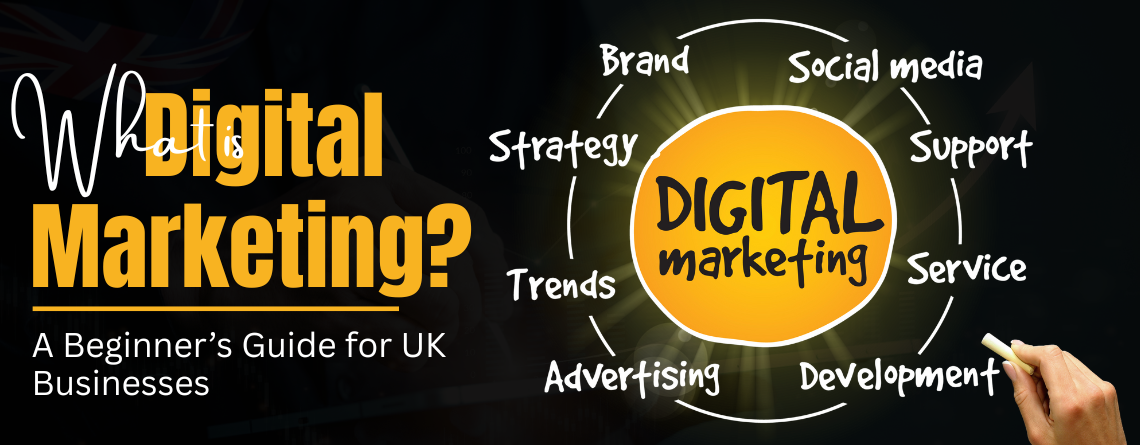
Digital marketing refers to the promotion of products or services using online channels and digital technologies to reach, engage, and convert customers. These channels include search engines, websites, social media platforms, email, and paid online advertising.
Unlike traditional marketing methods such as print adverts, billboards, or television commercials, digital marketing allows businesses to target specific audiences, measure performance in real time, and optimise campaigns based on data.
For UK businesses,digital marketing is not simply an optional strategy. It is a core business function that supports visibility, lead generation, customer engagement, and long-term growth in an increasingly competitive digital marketplace.
Why Digital Marketing Is Important for UK Businesses
The UK market has become highly digital-driven. Customers now expect to find businesses online, compare options quickly, and interact with brands across multiple digital touchpoints.
Digital marketing is important for UK businesses because it:
- Helps businesses reach customers where they already spend time online
- Enables precise targeting based on location, interests, and behaviour
- Provides measurable results through analytics and reporting
- Supports both local and national business growth
- Delivers better return on investment than many traditional marketing methods
With more UK consumers researching online before making purchasing decisions, a strong digital presence is essential for remaining competitive across almost every industry.
Types of Digital Marketing UK Businesses Should Know
Digital marketing is made up of several interconnected strategies. Understanding these core areas helps businesses choose the right approach based on their goals and resources.
Search Engine Optimisation (SEO)
Search engine optimisation focuses on improving a website’s visibility in organic search results. When UK customers search for products or services on Google, SEO helps businesses appear higher in relevant search results.
SEO typically involves:
- Keyword research based on user search behaviour
- On-page optimisation such as content structure and metadata
- Technical improvements like site speed and mobile responsiveness
- Building authority through high-quality backlinks
- Local SEO to target customers in specific UK locations
SEO is a long-term digital marketing strategy that delivers consistent traffic and sustainable growth when implemented correctly.

Content Marketing
Content marketing involves creating valuable and relevant content to attract and engage a target audience. This content can include blog posts, guides, case studies, videos, and educational resources.
For UK businesses, content marketing helps:
- Build trust and authority within an industry
- Support SEO efforts with keyword-focused content
- Educate potential customers before they make a decision
- Improve brand visibility across digital channels
Effective content marketing aligns closely with business goals and addresses real customer needs rather than promotional messaging.
Social Media Marketing
Social media marketing focuses on using platforms such as Facebook, Instagram, LinkedIn, and X to build brand awareness and engage with audiences.
In the UK, different platforms serve different purposes. LinkedIn is commonly used for B2B marketing, while Instagram and Facebook are popular for consumer-focused brands.
Social media marketing supports digital growth by:
- Increasing brand recognition
- Encouraging customer interaction and engagement
- Driving traffic to websites and landing pages
- Supporting paid advertising campaigns
Pay-Per-Click (PPC) Advertising
PPC advertising allows businesses to display paid ads on search engines and social media platforms. Businesses pay only when a user clicks on their advert.
PPC is commonly used for:
- Generating immediate website traffic
- Promoting specific products or services
- Supporting seasonal campaigns
- Testing new offers or markets
When managed properly, PPC advertising can deliver fast and measurable results for UK businesses of all sizes.
Email Marketing
Email marketing focuses on building and nurturing relationships with existing and potential customers through targeted email communication.
It is often used to:
- Share updates or promotions
- Nurture leads over time
- Encourage repeat business
- Maintain customer engagement
Email marketing remains one of the most cost-effective digital marketing channels when combined with a clear strategy.

How Digital Marketing Works for Small Businesses in the UK
For small businesses in the UK, digital marketing works best when implemented step by step rather than attempting every channel at once.
A typical digital marketing process includes:
- Identifying business goals such as leads, sales, or brand awareness
- Understanding the target audience and their online behaviour
- Building a professional, user-friendly website
- Focusing on SEO to attract organic traffic
- Using paid advertising strategically for faster results
- Tracking performance and adjusting campaigns based on data
Small businesses often see the best results by combining SEO with content marketing and selective paid advertising.
Digital Marketing vs Traditional Marketing in the UK
Traditional marketing methods such as print adverts, radio, and direct mail still exist, but they lack the flexibility and measurability of digital marketing.
Key differences include:
- Digital marketing allows precise audience targeting
- Campaign performance can be tracked in real time
- Budgets can be adjusted quickly based on results
- Digital channels support two-way communication with customers
For most UK businesses, digital marketing offers greater efficiency and better insight into customer behaviour than traditional marketing approaches.
How Much Does Digital Marketing Cost in the UK?
Digital marketing costs in the UK vary depending on strategy, competition, and business objectives. There is no single fixed price, but understanding general cost ranges helps businesses plan effectively.
Typical cost considerations include:
- SEO services often range from monthly retainers depending on scope
- PPC advertising budgets vary based on keywords and competition
- Content marketing costs depend on volume and quality requirements
- Social media management costs depend on platforms and frequency
Rather than viewing digital marketing as an expense, UK businesses should treat it as an investment that delivers measurable returns over time.
Common Digital Marketing Mistakes UK Businesses Make
Many businesses struggle with digital marketing not because it does not work, but because it is implemented incorrectly.
Common mistakes include:
- Focusing on tactics without a clear strategy
- Ignoring SEO fundamentals
- Using paid advertising without proper tracking
- Neglecting website performance and user experience
- Expecting immediate results from long-term strategies
Avoiding these mistakes allows businesses to build a more effective and sustainable digital marketing presence.
How to Get Started with Digital Marketing
Getting started with digital marketing requires a structured approach rather than trial and error.
Businesses should begin by:
- Defining clear and realistic goals
- Investing in a well-designed, optimised website
- Prioritising SEO and content creation
- Using paid advertising selectively
- Reviewing performance regularly and refining strategies
Consistency and data-driven decision-making are essential for long-term success.
When Should UK Businesses Hire a Digital Marketing Agency?
Many UK businesses reach a point where managing digital marketing internally becomes challenging. This often occurs when campaigns become more complex or growth slows despite ongoing effort.
Signs a business may benefit from a digital marketing agency include:
- Lack of in-house expertise
- Inconsistent results from current campaigns
- Limited time to manage marketing effectively
- Difficulty keeping up with algorithm and platform changes
Working with an experienced agency helps businesses implement professional strategies while focusing on core operations.
Why Working with a UK-Based Digital Marketing Agency Matters
Choosing a UK-based digital marketing agency provides advantages that international providers may not offer. Local agencies understand UK consumer behaviour, search trends, and regulatory considerations.
A UK-focused approach supports:
- Local SEO strategies
- Market-specific targeting
- Relevant content creation
- Clear communication and collaboration
For businesses targeting UK customers, local expertise plays an important role in achieving meaningful results.
Frequently Asked Questions About Digital Marketing
Is digital marketing worth it for UK businesses?
Yes. Digital marketing provides measurable results, scalable growth, and long-term visibility when implemented correctly.
How long does digital marketing take to show results?
SEO often takes several months, while PPC and paid campaigns can deliver quicker outcomes.
Can small businesses afford digital marketing?
Yes. Digital marketing can be scaled to suit different budgets and business sizes.
Is SEO better than paid advertising?
SEO and paid advertising serve different purposes and often work best together.
Conclusion
Digital marketing plays a central role in helping UK businesses grow, compete, and connect with their customers in an increasingly digital world. By understanding how digital marketing works and choosing the right strategies , businesses can build stronger online visibility, generate qualified leads, and achieve sustainable growth.
For beginners, the key is to start with a clear strategy, focus on fundamentals such as SEO and content, and continuously refine efforts based on data and performance. When implemented correctly, digital marketing becomes a powerful long-term asset for any UK business.




Leave a Reply